A High Need Baby; A Strong Personality Is Great, But Where's the Off Button?
"Yes! That's what I have: a high need baby! This is great! I'm not alone in this world!"
Those were my words of relief when in a moment of sheer desperation I typed in 'demanding babies' in Google, hoping to find a piece of inspirational baby advice.
After some time of loosely going through various parenting websites, I found the terms high need baby and attachment theory research on a great parenting website made by Dr. Sears (William Sears) and his wife, Martha Sears, who themselves have had quite a demanding baby.
The reason for my frantic search on the net was that in his own loving way, of course, my baby son was driving me to near exhaustion.
His emotional, social and physical demands (such as constant attention, touch, communication, comfort, feeding, carrying etc.) were sky high, strong and incessant.
In short, he was in high need of everything ... but sleep!
The intensity in everything he did and wanted didn't seem to 'fit' any of the common 'wise' baby books, that 'tell' you how your baby 'behaves' at a particular age and stage of child development.
Please note, the term high need baby isn't a medical diagnosis at all. It just implies that the baby's needs for ... well ... practically everything that involves the parent are very, very high.
According to my own experience - and the competent parenting advice presented by Dr. Sears - a baby with high needs is born that way:
- High need babies' feelings are just stronger
- Their sensitivity to everything around them is higher
- They are more intense and energetic in what they do
- And when they want something it is NOW ...
It's simply a part of their personality! Such a baby is just wired a different way temperamentally.
Now, to make this parenting talk less abstract and more concrete, I will present you with my son's story along with how I dealt with his high needs.
My High Need Baby: Hardly Sleeping and Waking Up Often and Easily
The common expression: 'Sleeping tight like a baby' seemed like a mocking joke for me, nothing could be further from the truth.
As an infant, my son would only sleep for about 20-30 minutes a couple of times during the whole day. I guess you could call it 'powernaps', except for the lack of 'power', as the slightest sound would wake him up.
Around midnight he would finally be able to sleep a bit more ... about one and a half hours at a time. Then he would be fully awake, want milk, then poo, then I had to change his diaper, by which time he would be hungry again.
These long breastfeeding and diaper changing sessions would take all in all about an hour and a half. Then he would finally fall asleep at my breast (the only place he could fall sleep at) just to mercilessly wake an hour and a half later ... and the circus would recommence.
So 'going to bed' at midnight (if you could call it that) wasn't a relief at all. Rather, I remember thinking: 'Oh no, it's night again!' Somehow high need baby life was easier during the day because struggling to stay awake seemed less exhausting than trying to wake up.
So Why Doesn't a High Need Baby Sleep?
According to Dr. Sears a baby with high needs is very sensitive and very much involved in what is going on around him or her.
In fact, such a baby is so much 'on' all the time that he or she has difficulties calming down and blocking out stimuli.
In other words, the 'switch off' button is very difficult to find - such a baby needs a parent to find the 'switching off button' as the baby cannot do it by him- or herself.
Also, a high need baby is more prone to waking up between the different sleep stages than other babies - hence the obligatory tiptoeing. Fortunately as a babies grow older, their sleep patterns mature (we feel it in the sense that they sleep better) but a high need baby's sleep system takes longer to 'mature'.
What I Did
First of all, having a baby with high needs was a mental exercise more than anything. I tried to put all expectations of how I thought things should be in the trash can.
The general guidelines in parenting books were completely useless because my reality was different and my baby unique.
So, instead of trying to make him fit my ideas, I turned it the other way around. I adjusted myself to him. I tried to give him whatever I felt he needed. I tried to learn how to 'read' him to meet his demands as soon as possible to prevent them from ... well, basically exploding.
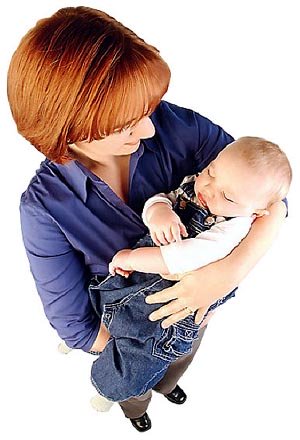
In relation to sleep, I would let him fall asleep on me until he was sound asleep (completely relaxed body and expression) and then I would try to put him down.
If I didn't wait a certain period of time, he would wake up with a great wail the instant I put him down. And some days he wouldn't even get into that deep sleep phase, so he would end up living on my arm the whole day.
Basically, I adjusted to doing everything around the house with just one hand. Some parents use baby slings ... unfortunately I wasn't really aware of the concept until after about six months ... but from then on he was permanently fixed to my hip.
When my son was about three years old, he was still a very light sleeper and typically woke up 1-3 times during the night. This may sound tough, but for me this was a great step; I just needed to give him a bit of comfort; a hand on his chest or lie next to him in his bed until he went back to sleep.
If I felt that he was starting to really come awake, or was particularly disturbed, I would take him to my bed and he would fall asleep curled up against me.
Constant Breastfeeding

My son was very quick to breastfeed - he would 'turbo' eat for five minutes and then be done!
However, he would also soon be hungry again.
As already mentioned, during the night I breastfed him every hour and a half. If you think this is often, it was nothing compared to the day.
During the day he would be hungry every half hour!
When he had breastfed, I couldn't just put him down. No, he was only happy on me. So we were more or less glued together.
As you can imagine, I thought every half hour was a lot. Surely it couldn't be right?
So I went to see some health care professionals for some baby advice. They told me that I should try and wait 3-4 hours before feeding him again. Well, needless to say, it couldn't be done!
The poor boy would go into a hysteric frenzy of hunger and frustration. This method may work for 'normal' babies but clearly it was 'torture' for my baby.
Why Does a High Need Baby Need to Constantly Breastfeed?
Breastfeeding is more than just food, it is intimacy, physical contact and it lays the foundation of strong, intuitive communication between a mother and her baby.
A high need baby's need for contact is very high and their will exceptionally strong, so if they want a warm breast, they will let you know in no vague terms.
Also to keep up the high energy level, a baby with high needs will need lots of energy, milk.
Mind you, the concept of feeding 'rarely' (every 3-4 hours) is not a true given, it's a western idea, as Dr. Sears also points out.

In the western world, we are so used to living on a schedule that it seems like a turbulent intrusion into our mindset just to go with the flow. Going with the flow is considered weak and a sign of lack of control.
However, in many other cultures the baby 'lives' on his or her mother, is carried around in a sling with direct access to the lovely 'organic milk food deposits' to get small sip whenever the need arises.
What I Did
I tried to live with no schedules, a life style which was possible to some extent as I was on maternity leave. A timeless life, so to speak. My baby decided when what was to happen. It was simply much easier to make my life fit him than the other way around.
Of course, if you have more than one child, this may be challenging. However, you could decide that the time you and your baby had alone - was timeless.
Also don't forget to reach out for help. Mom's are tough, but we all need a break now and then!
I was a single parent but fortunately my parents had just retired and were there to help me whenever I needed it. And I did need it quite a fair bit!
Constant Physical Contact

I remember thinking: 'Wow, now he has been happy alone on the mattress looking around the room for 7 minutes. That's a new record!'
Normally, my baby son wouldn't accept being down on the floor or in his chair. And if on rare occasions he did, Mom's 'freedom' was short - after a few minutes he would realize what was happening: 'Oh, I'm here, Mom is there, that's no good!' and complain strongly.
The main part of the first half year, he practically lived in my arms, then the next half-year on my hip!
We did everything together ... everything! My body was my son's home. As a baby he would live, sleep, eat and play on me.
Why Does a High Need Baby Need Constant Contact?
Dr. Sears and his wife, Martha, invented the term 'velcro baby', which I think is a wonderful term.
A high need baby is so extremely orientated towards union, being one with his mother, that being separated makes him feel lost and 'unwhole'. This desire for union or 'merging together' shows in his constant craving for contact and his reluctance to let go of it.
(However, some babies are what the Sears term 'uncuddly'. E.g. they need to lie more by themselves, perhaps because they are particularly sensitive.)
What I Did
Once again, two words: I adjusted!
I adjusted to him living on me and basically just tried to focus on the bright sides: 'What a gift that my son is so contact orientated'.
At almost three years of age, my son still loved cuddling very much. He was very comfortable with physical contact, and if he found he needed a 'dosage of Mom', he sought it out himself. He still knew what he wanted, but now he could get it himself and he did!
For instance, when he felt the need for union or bonding, he would come over and place both his hands on my cheeks, puts his head right next to mine, just very briefly, and then he would go back to whatever he was doing.
Sweet, right?
Restless and Easily Bored
Of course I can't really say if he was bored as a baby or restless or something else. But he would become very cranky and require constant attention if things around him didn't change, if he wasn't exposed to new experiences. He required constant 'newness'.
What I Did
To make life easier for me as well, I tried to always create a lot of variation every day and make plenty of expeditions to new places. New surroundings and new people made him occupied and interested (until he got scared of male voices, which complicated things a fair bit - see my parenting article on baby-separation-anxiety).
Sometimes when for some reason I couldn't leave my home, the only way he would be happy was if I carried him around on my shoulder and he could observe the world from there. Like a king observing his kingdom. Needless to say, I didn't get much housework done.
Also I tried to keep an open mind and make use of an excessive amount of creativity, trying out strategy after strategy after strategy until something worked.
And then when something didn't work the next day, I would put my creativity hat back on again. The only routine we had was that everything had to change all the time. Yes, this sounds exhausting, but viewed in the light of the alternative, it was nothing.
Wanted only People, Not Toys
While other babies his age started to play with toys by themselves in their pram or on the floor, my sweet baby son couldn't care less!
Toys were of absolutely no interest to him. Faces, eyes ... social interaction, he loved. People were his toys. And he would require constant availability of this luxury of a social circus all the time.
What I Did
I tried to put myself in his shoes thinking, okay, given the choice between inanimate objects that I couldn't really play with anyway and interesting faces that give me attention and make me smile what would I choose?
I tried to see his choice as a logical one. And therefore I did not try to discourage it - I rather stimulated it, seeing social interest as a positive gift.
At the age of nearly three, my son was ... fortunately for me ... also interested in toys.
In fact, he was very good at concentrating and could play on floor with cars - just running them backward and forwards - alone without interruption for half an hour, sometimes 45 minutes, which was a lot by his standards.
Constantly in Motion ... on Me
At three months old, my son found out it was great fun to jump on my lap. He continued to do this every time he was there, which he was most of the first year.
One of my friends very appropriately named him 'The Kangaroo Kid'. For hours on end he would jump up and down and up and down and up and down ...
And if he wasn't in motion himself, he would require me being it so; hence his being carried on my shoulder!
Why Does a High Need Baby Need to Be in Constant Motion
According to Dr. Sears, a high need baby may be seen as hyperactive. This is not meant as if to suggest that something is wrong. This 'type' of baby is just very active mentally and physically. To borrow a terminology from the Dr. Sears, their minds are like race cars and their bodies, tense like springs.
This 'hyperactivity' also means that a high need baby often has difficulties calming down alone and therefore needs more help to relax.
This is the cue for my next point:
Lots of Emotional Navigation and Soothing

I had a specific feeling that my son wanted to 'merge' with me emotionally. Yes, this may sound cryptic but that was my feeling. He needed my close physical presence to feel 'whole' enough and calm enough to 'let go' of the world and fall asleep.
Why Does a High Need Baby Need Lots of Emotional Soothing
Imagine being attentive to everything all the time in your surroundings. Everything is experienced at full blast power and there is no 'wall' between you and the world. Everything is strong and goes 'right in'! The only place where you feel 'whole' and secure is close to Mom.
According to Dr. Sears, a baby with high needs is not a self soother. Because of a high need baby's high mental gear, he / she has difficulties relaxing. He or she needs a calming presence to calm down.
Very Early Baby Separation Anxiety
Baby separation anxiety is a completely normal and healthy phase most babies go through. According to various child experts, the typical baby separation anxiety period usually starts somewhere between 7-11 months).
But my sweet baby son refused to follow the norm. The moment he came out was the moment from which he needed to 'live' on my body.
He was only a few months old when he would be very upset if I passed him over into someone else's arms or entered the room he was in and was not the one holding him.
Also, as I mentioned before, when he was only a few months old, male voices were considered a great threat which would upset him a lot. I remember going to dinner at a friend's house and every single time this friend spoke, my son would start to cry. Needless to say, not very convenient!
What You Give to a High Need Baby Will Come Back 100 Fold
Attachment parenting is all about close connection to your child, learning to read and know your child so you can respond to his or her needs.
Dr. Sears very simply recommends that you do whatever you can in whatever creative way possible to fulfil whatever need your baby has ... it will pay back 100 fold later when your child is securely attached to you.
Dr. Sears says that you shouldn't expect your high need baby to behave like a 'normal' baby. You shouldn't try to adapt his or her needs to a 'normal' baby's needs. Accept the high needs and do what you can to meet them.
And don't worry; it's not possible to spoil a child with love and attention. See common misconceptions about attachment parenting here.
The Single Thing that Made Life with a Baby with High Needs Easier ...
Acceptance!
Accepting that my baby was different and that he was perfect the way he was.
Accepting that his high needs were part of his intense and highly socially orientated personality.
A simple mind shift from thinking things should be different (which is basically a non-accepting attitude of what is) to simple acceptance made me much more relaxed.
Dr. Sears' page about high need babies truly helped me reach that point:
- I found relief in the fact that my natural choice in parenting style - attachment parenting - was OK and not 'wrong' or indulgent or a sign of lack of control.
- I fully accepted and found joy in the fact that my baby was special, that his strong social orientation was a true gift.
Share Your Experiences with Your High Need Baby
Do you have experiences or a story parenting a high need baby? Share them right here!
You can write whatever, you feel like writing regarding parenting a baby with high needs - your own experiences, others' experiences, tips and advice, philosophical insights... You never know - your words may come just at the right time for some desperate parent in need of hearing exactly what you have to say.
What Other Visitors Have Said
Click below to see contributions from other visitors to this page...
95 cm Yoga Ball & Breastfriend Pillow Are Must-Haves with a High Need Baby 
Visistor's high need baby experience:
A 95 cm yoga ball and a breastfriend pillow are must haves with my baby, Lacey.
From day 1 she would not …
Our Own Baby Bubble Not rated yet
As a first time mom I thought I did it right. I breastfed my daughter every 30-60 minutes for weeks and sometimes the sessions lasted up to two hours. …
High Needs Baby Girl = Attachment Parenting = Yale Not rated yet
Visitor's high need baby story:
My daughter was born full term in Dec 1999. I was shocked that she cried any time she was out of arms. She cried …
Stop listening to baby advice and start listening to your gut! Not rated yet
Visitor's high need baby story:
I have had to tell myself to stop listening to advice that others offer up.
Everyone seems to have an opinion …
Acceptance and Willingness Is My Key. Not rated yet
I sit here typing this as I’m holding my high needs baby and rocking, as it’s the only way she will sleep. My second daughter is 4 months and from the …
What I Did with My High Needs Baby Not rated yet
Visitor's high need baby advice:
"I have a high needs baby" - it seems like an AAA meeting doesn't it...? 😉 The principle is the same: finding …
My Super Sensitive Boy Not rated yet
Visitor's high need baby story:
"Wow that's a loud cry"....not the typical first words you expect to say after meeting you're bundle of joy, but that …
Having a High Needs Baby but Lack of Support/Income to Nurture Not rated yet
Visitor's high need baby experience:
Unfortunately, I do not have the luxury of a stable relationship or family life or financial life --- and presently …
Seven Weeks High Needs Not rated yet
(Visitor's experience):
My baby daughter isn't keen on sleeping at all. During the day she takes less than an hour. She wails until she gets what she …
My high need baby: High everything but sleep ;-) Not rated yet
(Visitor's experience):
My baby girl is 7 months now. I recognize myself sooo much.
The only difference is that she loves meeting new people and …
Your Positive Parenting Ally,
Birgitte

Want to stay in touch and get the latest news?
Sign up
for my free newsletter
Parent Coaching
- For Inner Peace, Clarity and a Deeper Connection to Your Child
 Being a parent can feel like a double-edged sword. Life with kids may feel like the greatest gift you have ever received, while at the same being hugely challenging, often leaving you confused, stressed and overwhelmed.
When we feel like this, we've lost touch with ourselves. We can't hear our own inner voice, and it's difficult to know what is 'right' for us and how to act.
I offer in-depth parent coaching to help you regain your balance and get back in touch with yourself. From a place of inner peace and clarity, your will find your own answers which will help you reconnect with your child from a place of unconditional love and acceptance.
Read more about my parent coaching here.
Where Would You Like to Go Next?
Attachment Parenting Articles
 Attachment Parenting and Intuitive Parenting: Read Your Child Rather Than Some Book! |
 What Is Attachment Parenting? 10 Sharp Truths and 2 Common Misconceptions! |
Attachment Theory Articles (Scientific Angle)
 Psychology Attachment Behavior; Find out When to Expect the Constant Clinging or the Letting Go of Mom's Skirt! |
 Attachment Theory is Good Basic Knowledge ... But Misses Out on Individual Infant Temperaments! |
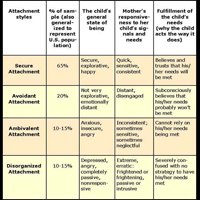 The Four Infant Attachment Styles: Straight to the Point, Quick Understanding! |
 Secure or Insecure Attachment in Infancy ... Largely Shapes Who We Are Today! |
Attachment Experts
 John Bowlby: The Father of Attachment Theory |
 Mary Ainsworth: The Refiner of Attachment Theory |
 Deep Insights into the Essence Dr Sears' Attachment Parenting along with a Fascinating Historical View on the Slow Rising Consciousness of Attachment Parenting |
Attachment, High Need and Separation Anxiety
 Baby Separation Anxiety The More Your Baby Clings, the More You Let Him! 10 Tips to Ease Baby Separation Anxiety |
 Valuable Insights into Separation Anxiety in Children and Babies: Meet Your Child with Full Acceptance and Deep Connection! |
 Facts and Fiction about the Controversial Ferber Method along with a Discussion of Its Potential Long Term Consequences |
Back to the top of this page about A High Need Baby; A Strong Personality Is Great, But Where's the Off Button?
Go to the Positive Parenting Ally Homepage



Want to stay in touch and get the latest news?
Sign up
for my free newsletter