10 Tips to Ease Baby Separation Anxiety: The More Your Baby Clings, the More You Let Him!
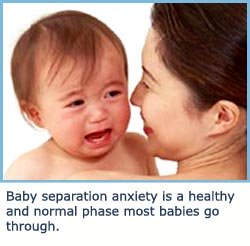 Do you suspect that your child is going through a patch of baby separation anxiety?
That's wonderful!
It's a healthy sign!
Plus, there are ways to make this phase go easier for all of you.
If you recognize some of the following typical signs of separation anxiety in babies, then yes, your parental instinct may be correct:
- Your baby is very clingy and wants to be in your proximity all the time (preferably in your arms).
- Your baby protests and gets upset if you get out of sight, for instance, leave the room.
- If you are the primary caregiver, your baby wants you and no-one else, not even other close caregivers.
- Your baby wakes up anxious at night and wants your comfort.
- When your baby is upset because of not being in your proximity, he or she will quickly calm down when you reunite in your arms.
- Your baby is uncomfortable around strangers and may even fear them.
- Your baby is crying for you when you leave him or her in day care or with a babysitter.
Needless to say that baby separation anxiety is hard on the baby and taxing and wearing for parents but hold out!
Separation anxiety is not only a phase that will pass; it's also a healthy sign in your child.
Your child is getting smart!
The Good News about Baby Separation Anxiety
 • It's a positive, healthy sign:
Separation anxiety in babies is an absolutely normal and healthy phase of child development.
• It's a positive, healthy sign:
Separation anxiety in babies is an absolutely normal and healthy phase of child development. • It will lessen and pass: Each baby is different, but typical baby separation anxiety is said to occur somewhere between 7-18 months and last about 2-5 months.
(However, these are only general guidelines; My own healthy high need baby son was only three months old when baby separation anxiety mercilessly set in and it lasted a lot longer than 2-5 months.
And if your baby or toddler doesn't show signs of separation anxiety, it doesn't necessarily mean that something is 'wrong' - just like we adults have distinct personalities, so do babies).
• Your baby is securely attached to you (secure attachment is a term from attachment theory: The fact that your baby wants you all the time means that you've done a great job. Your bond is strong and healthy. Your baby associates you with security and love and feels 'whole' when you are together.
This need to closely bond with you lasts all through childhood but changes in character as your child grows older - see
attachment behaviour throughout the ages and stages of child development.
- Your baby is getting smart: Your baby's brain is really on the fast track now. Your baby has discovered that he or she can affect the world with his or her actions; 'I cry, Mom comes!'. This is a great step, 'but' it also means ...
- Your baby is starting to remember: Before your baby was completely living in the now; No recollection of the past and no anticipation of the future. Now your baby remembers that you were there a minute ago but your're not here now. Your baby is now doing abstract thinking, wow! Your baby can now create an image of something not present, in this case, you! (This step in child development is called object permanence - the object remains in your baby's mind, so to speak).
However, your baby is still so much in the 'now' that he or she thinks your absence is permanent. Your baby hasn't yet learnt that when you leave, you will come back.
The Best News about Separation Anxiety
• You can positively help your baby and ease his or her way through this normal but rough patch.
10 Tips to Ease Baby Separation Anxiety
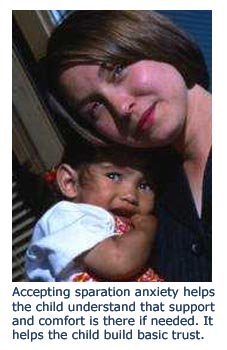
1) Accept Separation Anxiety and Keep Meeting Your Baby's Need for You
Your baby cannot be spoilt with attention and love, only grow. The more you give, the more your child will thrive!
When your baby observes that you react positively to his signals, your baby will feel this as an acceptance of him (the seed of a positive self image has been planted).
Also, quickly and consistently meeting your baby's need for attachment or parental bonding will help him build trust and confidence in people; 'Mom (help and comfort) is there if I need it!'
2) Ignore Parenting Advice Focusing on Not Spoiling or Rigidly Teaching Independence
Autonomy and independence are highly treasured values today in our western society. For some reason these values are also thought to apply to babies: 'A good baby will sit playing by himself for a long time' or 'A good baby will fall asleep by him- or herself!'
These are common expectations. I had them. (If your baby lives up to these ideas, it's great, but don't expect it) - a baby is a baby and not an adult - besides, numerous practical studies of attachment theory have also demonstrated that baby dependence paves the road to natural and healthy child independence.
3) Keep Separation Situations Reduced When Possible:
The more your baby clings to you, the more alluring it may seem to force feed 'lessons of independence' to your baby by ignoring your baby's needs.
It's completely natural to think this way (I know I did when things ran high), but you may not want to go there! Your baby isn't manipulating you. He or she really needs you to feel whole and secure.
But if you really have to leave to go somewhere at some point, which we all do, there are ways to prepare your baby for it:
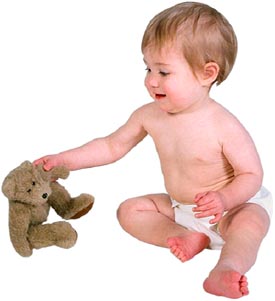
4) Introduce a Baby Lovey as a Separation Soother:
A lovey or in the sophisticated language of psychology, a transitional object, is a treasured toy or a beloved item that will help your baby cope with your absence.
To some extent, a successful lovey will 'replace' you as a source of security when you're gone. For some children this is a great source of comfort, for other children, loveys are pointless.
Try it out and if it works, wonderful! Personally, I could never get my son permanently interested in one, but in my son's nursery I saw babies and even kids comforted by anything from pillows to teddy bears to small blankets.
Usually a baby lovey is soft and cuddly in order to imitate human physical closeness. But if your child falls in love with a spoon because it fits nicely into his or her hand, wonderful, seize the day!
5) Play 'Peek-a-Boo' to Gently Introduce Concepts of Separation and Reunion
As I mentioned, your child now has a firm grasp of separation but hasn't necessarily understood that things (you) will return. Games like hide-and-seek, peek-a-boo and where's-the-baby are said to help your baby understand that things go away and return.
For instance, you can put a cloth over your head or your baby's head and then suddenly remove it to your baby's great pleasure. Many babies love this game and don't feel their security threatened.
If your child accepts it, you may also experiment by quickly leaving the room while singing or talking so that you're out sight but can still be heard.
But don't force it - it's a game that requires acceptance from you child. Remember, you are doing it for your child, not the other way around.
My son liked the peek-a-boo games but I'm doubtful as to whether they had
any effect on his separation anxiety and I sure couldn't leave him happy on his own even if I was singing ... and it was in tune!
6) Gently Introduce Day Care or Babysitters
If you have the possibility of leaving your baby with familiar people this is great. But many don't have that option in the long run.
So if your child is starting day care or has to be cared for by babysitters, use your gut feeling as to who you entrust your baby to and try to make arrangements for a slow introduction period, perhaps a few weeks.
Be present the first couple of times and then initiate brief separation periods which you gradually make longer and longer; 15 minutes, 30 minutes, 1 hour etc.
7) Don't Avoid the Goodbyes
Explain to your child what will happen; that you have to go but will be back later and say goodbye and then leave (your child may not understand your words now but will very soon).
It's important that your baby sees you leaving. If you sneak out thinking it will be easier on the child (and on you), chances are that you will make your child's baby separation anxiety even stronger. Your baby may end up feeling general anxiety because he or she may never know if all of sudden you decide to be gone.
What your baby needs now is to learn the simple pattern that you say goodbye, you leave, and you return later.
8) Don't Prolong the Goodbyes
The longer you stay, the more you invite your baby 'to fight' in vain for your staying. Also it's painful for both of you. If it can be done, stay until your child is happily engaged in playing, then say goodbye, make sure your baby sees it, and leave.
If your baby is crying, (It took more than 1 year for my son to stop crying at my departure even though I knew he was being taken good care of) be strongly present with your child, explain what is to happen, what a wonderful a time he will have (positive preparation of your baby's consciousness), kiss and leave with a reassuring smile.
9) Leave with a Positive Attitude
You are a mirror to your child - your child is so quick to suck up what you're feeling. If your child's sees you unhappy leaving him or her, then it may reinforce the separation anxiety: 'Mom (or Dad) is unhappy, something must be wrong. This situation is not good!'.
If you leave with your chin up (and yes, it's tough to see your child unhappy) you'll indirectly tell your child: 'Everything is ok!'
10) Don't Come Back until You Are Really Back
It's okay to stand behind the door and listen to how long it takes for your child to calm down. But stay cool, don't go in.
By going in, you indirectly tell your baby that his or her efforts are worthwhile ... today! But you can't always come back. This inconsistency will confuse your child and perhaps make his or her separation anxiety grow.
Even though it took more than a year for my son not to cry at my departure, I knew that his crying would only last a minute or two at the most. I knew that from listening behind the door and from what the day care staff told me.
When Nothing Works!
One consistent companion you have when dealing with your child and baby separation anxiety, is your parental instinct, or in other words, your gut feeling.
Use it!
Trust it!
I simply can't stress this enough!
If you sense something is not right with your choice of day care institution or sitter, don't ignore it.
Perhaps there is poor chemistry between your baby and the carer(s), perhaps the pedagogical strategies are unsuited for your child's personality or perhaps your child is extra sensitive and needs to be in a setting with fewer children to feel secure. There could be many reasons.
Have a good talk with the day care staff or babysitter - many professional cares are professional and as they spend many hours a day with your child, they often have a pretty good idea of why your child may not be settling in.
However, if you feel your care provider is not the right choice, you may want to seriously consider new childcare arrangements.
Separation anxiety in babies is tough on all involved, your baby needs you desperately, your partner may feel overlooked or useless and you may just crave two minutes by yourself.
But like everything else with kids, it's a phase, it will slowly lessen, change character, and pass.
Your Positive Parenting Ally,
Birgitte

Want to stay in touch and get the latest news?
Sign up
for my free newsletter
Parent Coaching
- For Inner Peace, Clarity and a Deeper Connection to Your Child
 Being a parent can feel like a double-edged sword. Life with kids may feel like the greatest gift you have ever received, while at the same being hugely challenging, often leaving you confused, stressed and overwhelmed.
When we feel like this, we've lost touch with ourselves. We can't hear our own inner voice, and it's difficult to know what is 'right' for us and how to act.
I offer in-depth parent coaching to help you regain your balance and get back in touch with yourself. From a place of inner peace and clarity, your will find your own answers which will help you reconnect with your child from a place of unconditional love and acceptance.
Read more about my parent coaching here.
Where Would You Like to Go Next?
Attachment Parenting Articles
 Attachment Parenting and Intuitive Parenting: Read Your Child Rather Than Some Book! |
 What Is Attachment Parenting? 10 Sharp Truths and 2 Common Misconceptions! |
Attachment Theory Articles (Scientific Angle)
 Psychology Attachment Behavior; Find out When to Expect the Constant Clinging or the Letting Go of Mom's Skirt! |
 Attachment Theory is Good Basic Knowledge ... But Misses Out on Individual Infant Temperaments! |
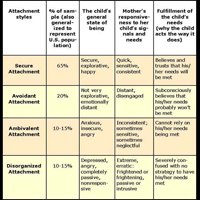 The Four Infant Attachment Styles: Straight to the Point, Quick Understanding! |
 Secure or Insecure Attachment in Infancy ... Largely Shapes Who We Are Today! |
Attachment Experts
 John Bowlby: The Father of Attachment Theory |
 Mary Ainsworth: The Refiner of Attachment Theory |
 Deep Insights into the Essence Dr Sears' Attachment Parenting along with a Fascinating Historical View on the Slow Rising Consciousness of Attachment Parenting |
Attachment, High Need and Separation Anxiety
 A High Need Baby: A Strong Personality Is Great, But Where's the Off Button? |
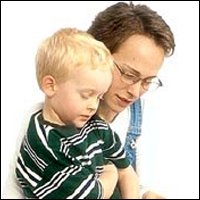 Valuable Insights into Separation Anxiety in Children and Babies: Meet Your Child with Full Acceptance and Deep Connection! |
 Facts and Fiction about the Controversial Ferber Method along with a Discussion of Its Potential Long Term Consequences |
Back to the top of this page about 10 Tips to Ease Baby Separation Anxiety: The More Your Baby Clings, the More You Let Him!
Go to the Positive Parenting Ally Homepage



Want to stay in touch and get the latest news?
Sign up
for my free newsletter